
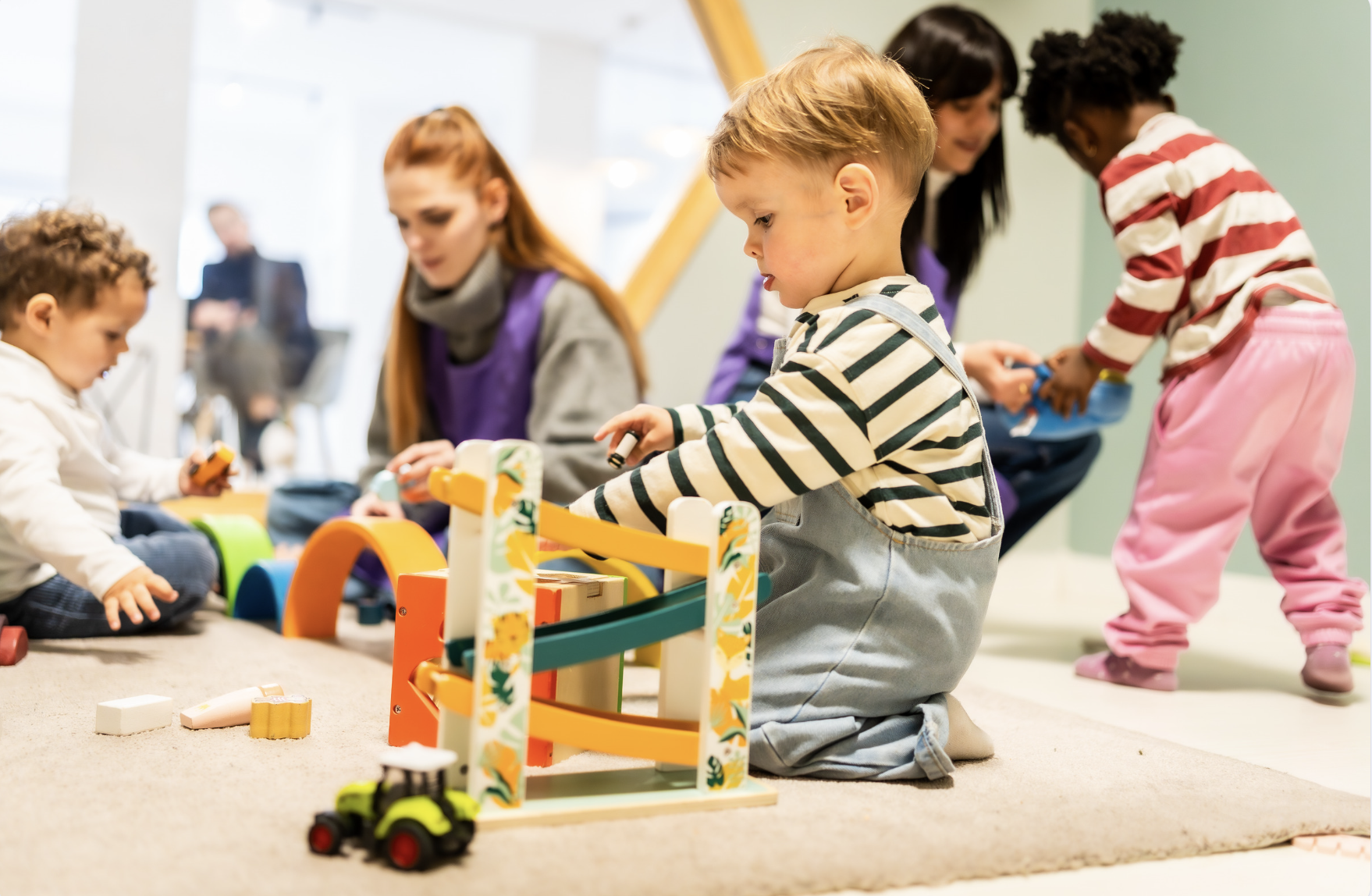
This week, Australia marks Early Childhood Educators' Day, on Wednesday 2 September. It is easy for a week like this to settle into ritual: a morning tea, a shared photo, a thank-you post.
We want to use it differently. To ask why our educators choose this work in the first place, why so many are finding it harder to stay, and what they need to thrive rather than simply endure.
Why choose this work?
Australia’s educators do not fall into this work. They choose it, and keep choosing it. Eighty-five per cent describe what they do as a profession, not a job, something held onto with pride.
They talk about lighting a child's first spark of curiosity, and about standing beside a family through the anxious early mornings of drop-off until, one day, a confident, capable kid walks in without a backward glance.
Few professions are trusted with as much: shaping a person's earliest sense of safety, curiosity and self, at the exact age when it matters most.
That is worth saying plainly, in a week built to say it.
Our educators do not need convincing that this work is extraordinary. At SAFE, we recognise the human instinct combined with the professional. That's extraordinary. Being on call to little humans requires vigilance, and our educators must be ‘on’ continuously. .
Why continuity matters
For a young child, familiar faces are part of feeling safe.
It is the educator who notices that they are quieter than usual. The person who knows how they arrive in the morning, what helps when they are overwhelmed, who they seek out when something is wrong. Someone who has seen them yesterday, and the day before, can recognise a change that might otherwise be missed.
That continuity of care matters. It gives children the security of relationships that build over time, and gives educators the knowledge to see not just what is happening today, but what is different from yesterday.
Which makes educator retention about much more than workforce stability. When experienced educators leave, children lose familiar relationships and services lose the accumulated knowledge of the children in their care.
Annual turnover in the sector sits close to 30 per cent. National workforce research has found something particularly telling: many of the educators most likely to leave are among the most experienced, the people who have invested in further training and teaching qualifications because they want to do this work well.
The challenge, then, is not simply to attract people into early childhood education. It is to create the conditions that allow good educators to stay, grow their expertise and build the long-term relationships children need.
The work is more than care
“Educator and Child Care worker” describes a role. “Caregiver” gets closer to what happens in the room: building the relationships through which young children learn that they are safe, known and able to trust the adults around them.
We are choosing this word more deliberately because language shapes how a profession is valued. Undervaluing this work has consequences. They show up as burnout, attrition and, eventually, gaps in the safety net families rely on.
Anyone who has spent time with young children learns the same lesson early: a child settles their big feelings by borrowing a calm nervous system nearby.
Practitioners call this co-regulation. Our educators live it, in every tantrum, every separation-anxious morning, every meltdown soothed simply by staying steady when a child cannot.
An adult's calm helps a child feel calm.
That is quiet, unseen and genuinely physical work. And the depletion it leaves behind does not always stay contained.

Who holds the people who hold our children?
Which raises a question rarely asked in workforce conversations: who holds the people doing all that holding?
An educator who spends a full day co-regulating a room of children cannot simply leave that labour at the gate. It asks something of the body as much as the mind, and it deserves a response that meets it there too.
The question of educator wellbeing is therefore not separate from the question of child safety. It is part of it.
An adult who is depleted has less capacity to notice, respond and remain present. A workforce constantly running at its limits has less capacity to offer the consistency and attention children need.
Some of the sector's own thinking already points the way. Reflective practice and reflective supervision, used across the caring professions, give educators a regular, trusted space to process a hard day rather than carry it home alone.
Community, sector and government could extend that thinking further: rostering that allows for a genuine pause rather than back-to-back rooms all day; physical spaces in services where adults can properly rest, not simply move between activity rooms; and a culture where saying “that was a hard day” is understood as human, rather than as a lack of resilience.
None of this replaces fair pay or lighter paperwork. It sits alongside them.
Because a nervous system that never gets to settle cannot keep offering steadiness to others, however good the intentions.
What we see educators need most
Ask our educators what is missing and the answers rarely surprise anyone who has spent time in a room with them.
What educators need most is the capacity to do the work they came to do.
That means pay that reflects the skill and responsibility of the work, rather than sitting near the bottom of the wage ladder.
It means time with children that is not swallowed by paperwork. Recent research from the University of Sydney found educators spend less than a third of their day in focused interaction with the children in their care.
It means career pathways that lead somewhere, so five years spent with three-year-olds is recognised as expertise, not simply experience.
It means mentorship for the leaders absorbing everyone else's pressure while their own wellbeing goes unmeasured.
And it means systems, including the safety and compliance systems our sector is right to demand, that share the load of vigilance rather than resting it on one person's shoulders.
What thriving looks like
Thriving is not a wellness day or a discount at the coffee van, though neither hurts.
It looks like staffing levels built for relationships, not only ratio compliance.
It looks like the phased wage increases the Fair Work Commission began rolling out this year, recognising the skill and responsibility of the work.
It looks like documentation that is purposeful, efficient and effective, strengthening the record of care and observation without taking educators away unnecessarily from the children in their care.
It looks like a public conversation about our educators that can hold two truths at once: that child safety failures deserve full scrutiny, and that the overwhelming majority of our caregivers are doing careful, attentive work that shapes children for life.
And it looks like technology that gives educators time back, rather than asking for more of it.
Technology can reduce duplication, simplify documentation and help services carry some of the weight of compliance, so the benefit lands where it matters most: more time for educators to be present for children.
There is good news in this conversation, Australia has a deeply committed early childhood workforce. We know more than ever about the importance of secure relationships in the early years. We have growing evidence about what children need to thrive, and increasingly sophisticated tools that can help the people caring for them.
The opportunity now is to bring those things together.
Where SAFE stands
SAFE’s Child Safety program combines SAFE’s Triage for children, educators, and caregivers because we believe the sector's safety and its workforce's wellbeing are part of the same project, not two competing priorities.
What must never be lost in the frontline or government institutions of safety: is the human capacity to know a child well.
SAFE was invented as a human observation, and an expert visibility layer, so what educators see, notice and know about the children in their care can be actioned
Educators and caregivers can now contribute what they see, notice and know about children in their care to, so their instincts have a place to go.
That matters as safety can begin with something small. A change in behaviour. A child who seems quieter. A pattern that does not quite feel right. An instinct that is difficult to explain but worth paying attention to.
SAFE gives that observation somewhere to go, creating a canonical record that can contribute to a broader picture over time.
What SAFE provides is a program designed to work with the people who know children best, helping make their observations visible within the broader systems of safety around them.
The future starts with us
This year's Educators Week theme is The Future Starts With Us, and it is more than decoration. Every educator who stays, who keeps choosing this work day after day, is quietly building the future the rest of us will inherit. So perhaps our thanks can come with a more useful question attached:
What would it take for our educators and caregivers to thrive, not just get through the week?
The answers are largely known. Now comes the more hopeful part: giving them the conditions, recognition and support to put those answers into practice, because when we invest in the continuity, capacity and wellbeing of the people who care for our children, we strengthen the safety net around those children.
The future really does start with them.

Latest from SAFE.
Articles, explainers, national reform commentary and safeguarding system analysis - published as the conversation moves.